Transforming a First-year onboarding tool into a retention-driving student platform
Guide
Overview
Guide was originally launched to streamline onboarding for first-time college students, helping them navigate the transition into college life. While early-semester engagement was strong, usage consistently declined as students progressed through the academic year.
I led the redesign effort to evolve Guide from a first-year onboarding tool into a scalable platform supporting students across their entire college journey. Working against a strict academic calendar, we delivered a redesigned MVP before the start of the school year — modernizing both the experience and the visual system.
My Role
Lead Product Designer
Led end-to-end design effort
Facilitated cross-functional design studios
Partnered with UX research on student testing
Defined new home experience and engagement model
Contributed to updated visual design system
Collaborated with product managers to deliver MVP before academic year launch
Impact
62%
Increase in user retention beyond the first semester
33%
Increase in users beyond their first year in college
28%
user-to-resource connection rate
78%
Major Explorer completion rate
The Challenge
Although Guide successfully supported new students, it had gradually become a disorganized library of content, with resources buried beneath layers of accumulated material. As students moved beyond their first semester, the platform lacked focus and contextual relevance.
Engagement data showed a clear pattern: usage spiked at the beginning of the semester and declined steadily afterward. The product was optimized for onboarding — not long-term engagement.
In addition, the visual language felt dated and overly business-oriented, misaligned with the expectations of a younger, consumer-facing audience. The challenge was to transform Guide into a platform relevant to every student, not just first-year users — and to do so before the next academic year began.
The Solution
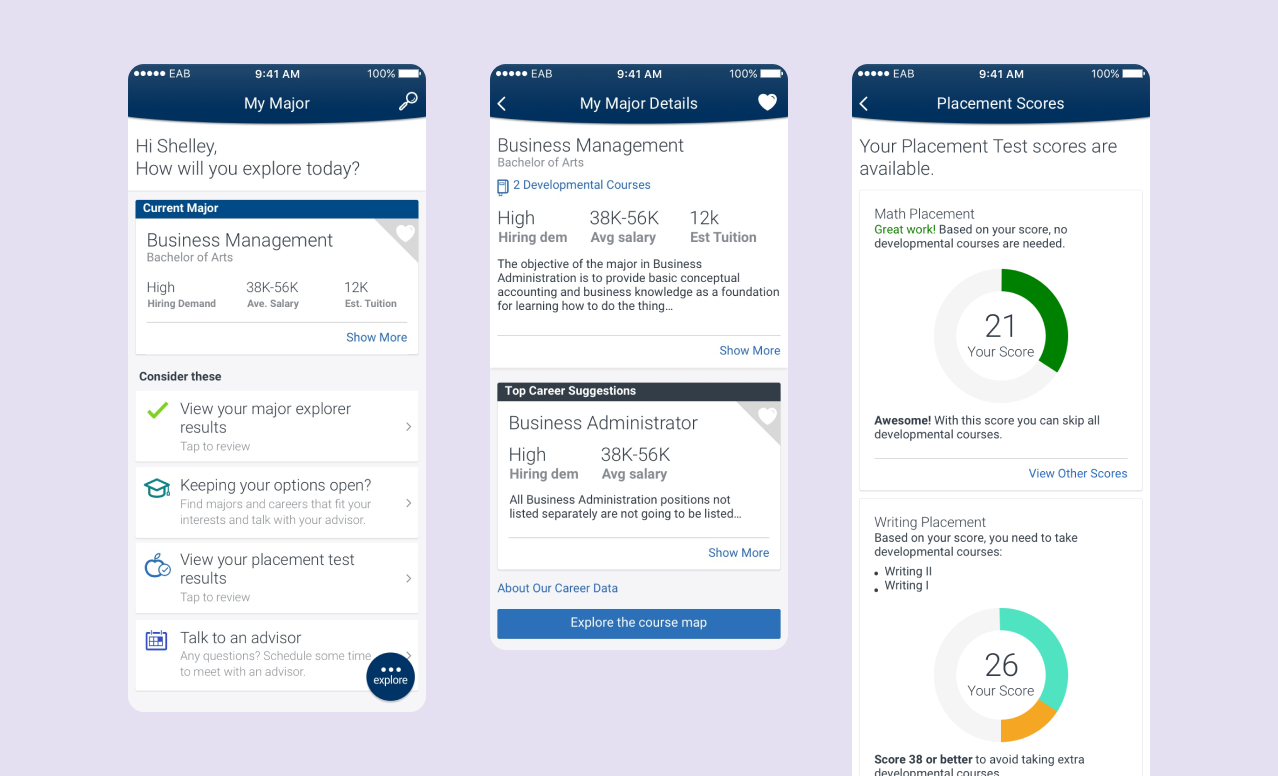
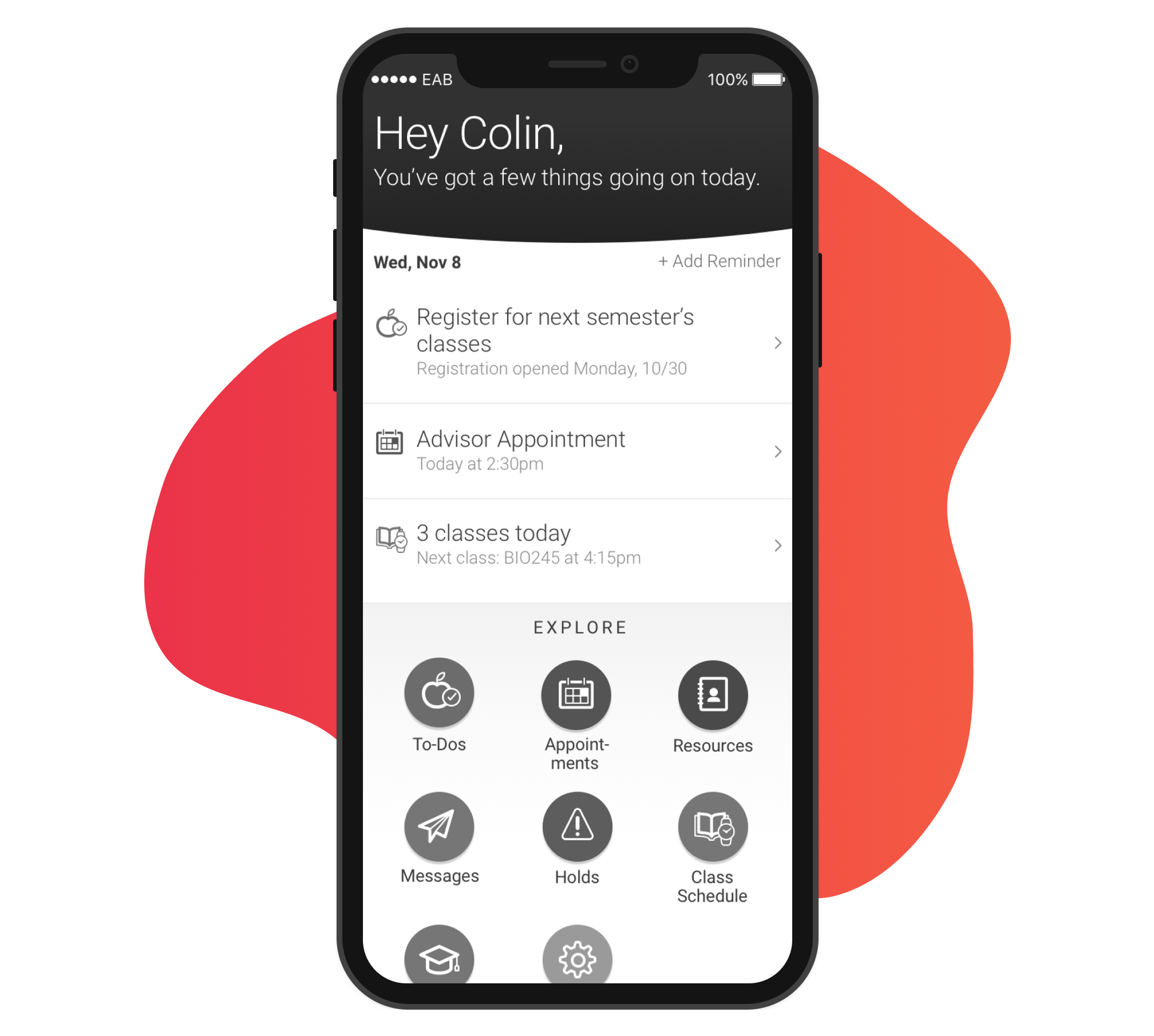
We restructured Guide around a personalized, task-driven home experience that prioritized immediate, time-sensitive actions while de-emphasizing secondary content.
Rather than presenting students with a static content library, we introduced a dynamic home screen that surfaced relevant tasks, contextual tips, and school-specific resources based on where students were in the semester.
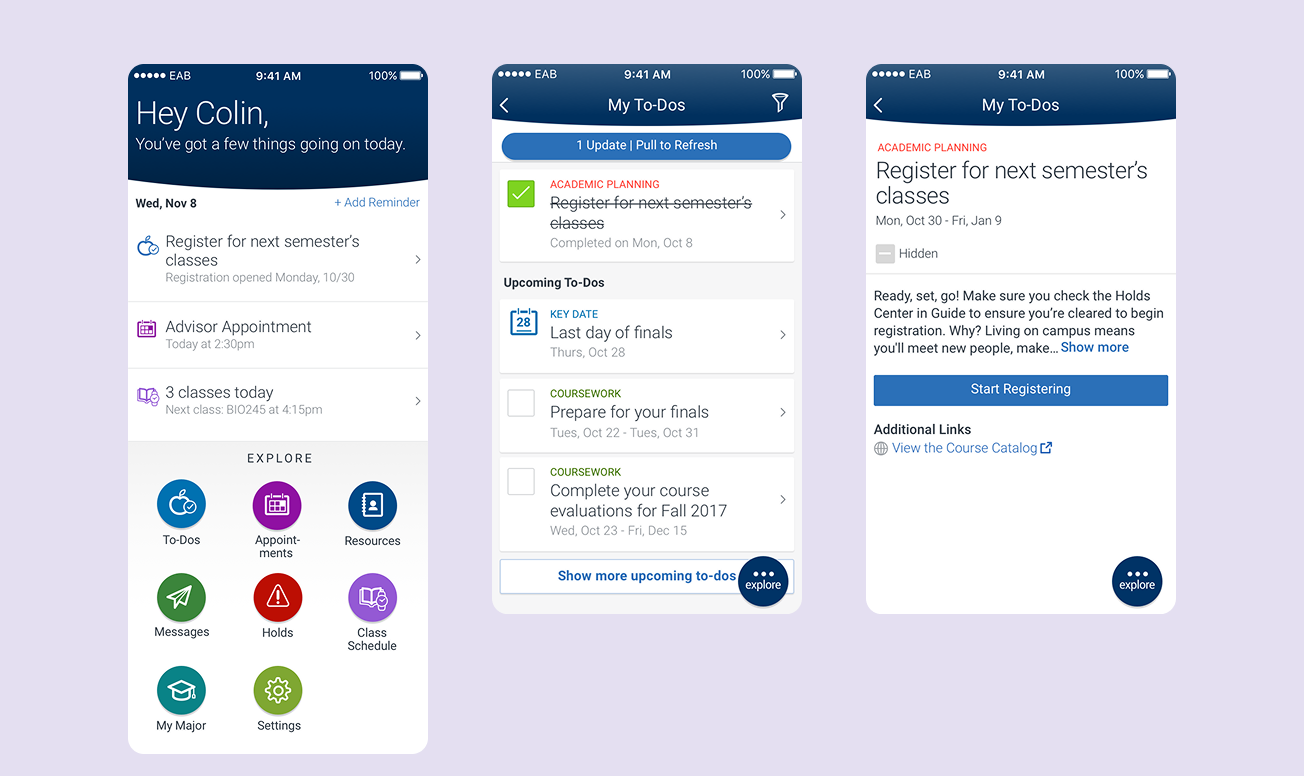
We also introduced Major Explorer, a guided experience that helped students explore and compare academic majors through structured prompts and curated resources.
Instead of forcing students to search through scattered information, Major Explorer created a clear pathway for discovery, helping students connect with relevant academic programs earlier in their college journey.
Major Explorer